INNAQUE
Integrating Innovative Nature‑Based Solutions for Resilient Aquatic Ecosystems
INNAQUE is a three-year Erasmus+ Capacity Building in Higher Education project that upgrades undergraduate education in aquatic resources management through innovative nature-based solutions and biotechnology. It connects universities in Egypt, South Africa and Europe to create a new, practice-oriented learning pathway that prepares students to safeguard and restore aquatic ecosystems.
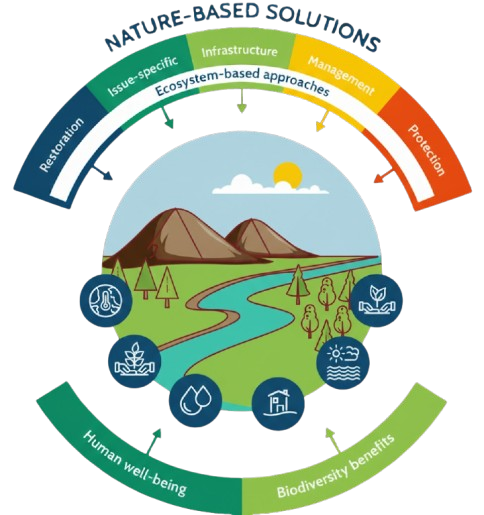
Understanding nature-based solutions
Nature-based solutions offer a technically sound and cost-effective approach, utilising natural processes to address water challenges.
Transforming education for resilient waters
INNAQUE strengthens environmental and earth sciences programmes that deal with marine and inland waters, shifting them from a predominantly theoretical focus to an applied, management-oriented approach. The project develops new and updated courses, modernises laboratories, and promotes active learning so that graduates can tackle pollution, climate impacts, invasive species and other pressures on aquatic ecosystems.
INNAQUE BSc – a new interdisciplinary degree
At the core of INNAQUE is the INNAQUE BSc, a new Bachelor of Science programme that integrates aquatic resources management with biotechnology and nature-based solutions. The programme combines fieldwork, laboratory training and problem-based projects to build competencies for work in environmental, industrial, agricultural, public health and policy sectors.
Focus on resilience of marine and inland waters
Strong link to labour market needs and stakeholder input
Mobility opportunities between partner universities
Target groups and communities
INNAQUE benefits undergraduate students, academic staff and researchers by providing updated curricula, training opportunities and modern teaching resources. Public authorities, industry, NGOs and local communities gain access to better-qualified graduates and new knowledge that supports sustainable development and climate resilience.
A Euro–African university network
The project is coordinated by Alexandria University and brings together universities from Egypt, South Africa, Italy, Greece and Slovenia. Each partner contributes expertise in marine science, biotechnology, distance education, sustainability and governance to co-design and implement the INNAQUE BSc.
What the project will deliver
- Design and accreditation of the INNAQUE BSc curriculum
- Development of teaching materials and digital resources
- Staff training and student mobility between partner countries
- Upgrading of laboratories supporting aquatic ecosystem studies
- Public events, newsletters and a collaborative online platform
Latest updates
- Palermo meeting in March
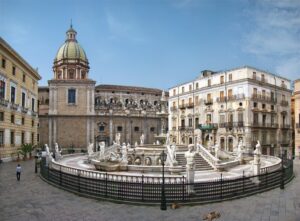 INNAQUE partners will meet in Palermo (Italy) in March for the project’s annual face-to-face management meeting, hosted by the University of Palermo (UNIPA). The meeting will review progress, timelines, and the quality of activities, and coordinate next steps across the consortium. It is planned to be held back-to-back with teaching experience exchange activities to support… Read more: Palermo meeting in March
 - Forthcoming events
 Information workshops and open days will introduce the INNAQUE BSc to students, university staff and key stakeholders. These sessions will present the new competence-based BSc curriculum and explain how the programme connects learning outcomes to real labour‑market needs. Activities are designed to engage a wide audience, including communities, parents and prospective national and international students.
 - Kick-off meeting
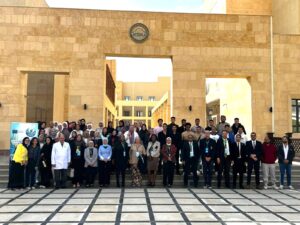 Project partners met in Ras el Sedr, Egypt, to launch INNAQUE, outline the detailed work plan and start all agreed actions.
Stay in touch
For questions about the project or the INNAQUE BSc, please contact the INNAQUE coordination team at Alexandria University.
Project coordination office
ALEXANDRIA UNIVERSITY
This project is co-funded by the Erasmus+ Programme of the European Union under the action “Capacity Building in the field of Higher Education”. The contents of this website reflect the views of the authors only and do not necessarily represent the views of the European Union or the granting authority.